Delivering Reliable Field Data in Iraq — Even When It’s Hard to Reach
How ARFADA’s monitoring, evaluation and research teams overcome real field data collection challenges across Iraq — and turn them into dependable evidence.
In monitoring and evaluation, the quality of a study is decided in the field. Reliable field data collection in Iraq — across governorates such as Nineveh and Salah al-Din — is rarely straightforward. But the way a MERL team anticipates and responds to those challenges is exactly what separates dependable evidence from unreliable numbers.
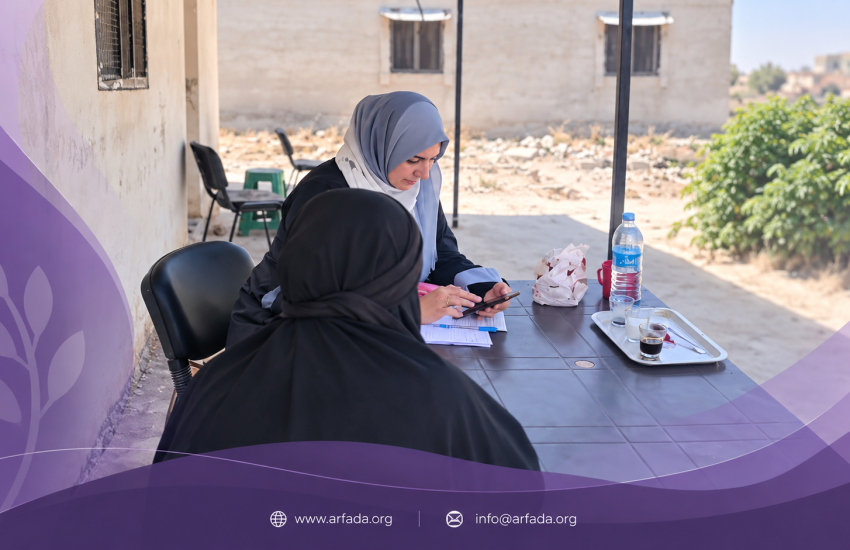
At ARFADA, with a permanent office in Erbil and trained local teams across the country, every evaluation and third-party monitoring (TPM) assignment in Iraq brings real-world obstacles: remote and hard-to-reach communities, access and security constraints, communication gaps, and linguistic diversity. Below, we share how our field teams navigate these challenges — while protecting data quality, ethics, and the safety and dignity of the communities we serve, in line with recognised humanitarian standards such as the international humanitarian and human-rights framework and our MERL services.
1. Reaching remote communities during data collection in Iraq
A recurring challenge in data collection in Iraq — particularly household survey work — is that many sampled respondents live far from governorate centres, in villages, rural areas, and remote locations across Nineveh and Salah al-Din. Reaching them requires more than good intentions; it requires enough trained field capacity on the ground.
Sampled respondents were located far from the centres of Salah al-Din and Nineveh governorates, threatening full sample coverage.
We deploy a sufficient number of enumerators to cover all points — including villages, rural areas, and remote locations — so the farthest respondents are still reached and the sample stays statistically valid.
2. When respondents can’t be reached by phone
Contact lists are often incomplete, and communication points can be limited — closed phones, out-of-coverage numbers, and no reliable way to make contact. In remote data collection, this can quickly erode a sample if not managed rigorously.
Closed phones and a lack of communication points made some sampled respondents impossible to reach.
We protect the integrity of the sample through statistically sound representation, replacing unreachable respondents with valid substitutes so the results remain accurate and representative.
3. Working safely in high-risk areas
Some assignments take field teams into areas with heightened security constraints, where coordination and permissions are essential before any data collection can begin.
Data collection in parts of Nineveh faced security constraints that temporarily paused fieldwork.
Our field coordinator worked directly with the relevant security authorities — securing the necessary approvals and mission letters — so the team could resume and complete data collection safely.
4. Ethical documentation and consent
Photography and documentation add value to a report — but only when they respect the wishes and dignity of the people involved. Ethical data collection means consent comes first, always.
In some cases, respondents did not consent to having their photographs taken during documentation.
We fully respect the beneficiaries’ choice. Where consent to photograph is not given, no images are taken — the person’s dignity and privacy always take priority over documentation.
5. Meeting respondents on their terms
Reliable evaluation data means fitting the fieldwork around people’s lives — not the other way round. Respondents are often only available outside standard working hours, or in their own workplaces.
Some respondents could only meet after official working hours or at their place of work, making standard scheduling difficult.
We mobilize additional field capacity to cover every sampled respondent according to their availability and preference — ensuring no one is excluded because of timing.
6. Phone-based interviews when face-to-face isn’t possible
Not every respondent can meet in person. Some work across multiple locations, or have no fixed place for an interview. A flexible, mixed-mode approach keeps the data complete.
Some respondents preferred a phone interview because they had no suitable time or place for a face-to-face meeting.
We conduct online and phone-based surveys for these respondents, maintaining the same quality standards as in-person data collection.
7. Bridging linguistic diversity
Iraq’s rich linguistic diversity means a single language of data collection is rarely enough. Accurate, culturally aware data depends on enumerators who can speak with respondents in their own language.
The multiplicity of respondents’ languages required enumerators from the same communities and backgrounds.
We build an integrated field team drawn from all segments of society, so every respondent can be interviewed in their own language — improving both accuracy and trust.
Turning data collection challenges into reliable evidence
What these situations share is a mindset: obstacles are not excuses for weaker data — they are problems to be solved with planning, coordination, and ethical rigor. This is the core of high-quality data collection in Iraq, and of reliable MERL (Monitoring, Evaluation, Research and Learning) in Iraq and other fragile contexts.
The reliability of an evaluation is not decided in the report. It is decided in the field — in how every challenge is anticipated, managed, and overcome.
By combining trained local enumerators, strong coordination with authorities and partners, and adaptive, ethically grounded methods, ARFADA makes data collection in Iraq dependable — so that even the most difficult assignments produce data that partners and donors can trust.
Frequently asked questions
What does a monitoring and evaluation (MERL) company do in Iraq?
A monitoring, evaluation, research and learning (MERL) company in Iraq measures whether humanitarian and development programs are reaching the right people and achieving their goals. This includes baseline and endline evaluations, third-party monitoring (TPM), needs assessments, and field data collection through household surveys, key informant interviews (KIIs), and focus group discussions (FGDs) across governorates such as Nineveh, Salah al-Din, and the Kurdistan Region.
How do I choose a data collection company in Iraq?
Look for a company with a permanent local presence, trained enumerators across the country, proven experience in your target governorates, strong data-quality controls, and the ability to work ethically and safely in hard-to-reach areas. A track record of completed evaluations and monitoring assignments for local and international organizations is a strong indicator of reliability.
What is third-party monitoring (TPM) and when do organizations need it?
Third-party monitoring is independent verification of project activities by a neutral party — used when donors or organizations cannot access project sites directly, or need objective confirmation that activities are reaching beneficiaries. It is especially valuable in insecure or remote areas of Iraq where independent field access and verification are difficult.
Does ARFADA have an office in Iraq?
Yes. ARFADA operates a permanent office in Erbil, in the Kurdistan Region of Iraq, with trained local field teams working across the country. This local presence allows us to deliver monitoring, evaluation, and research services quickly and reliably nationwide.
Which sectors and areas does ARFADA cover in Iraq?
ARFADA has delivered evaluations, third-party monitoring, needs assessments, and field data collection across multiple sectors and governorates in Iraq — including Nineveh and Salah al-Din — for a range of local and international organizations, with more than 29 projects completed to date.
Need reliable data from a difficult context in Iraq?
Talk to our team about monitoring, evaluation, and field data collection for your next program.
Get in touch