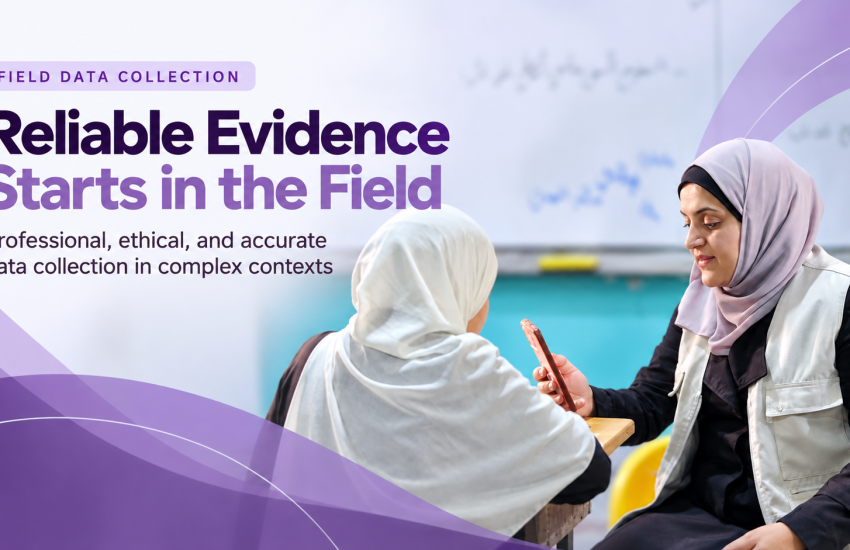
Distribution Monitoring in Syria: Keeping Data Quality Intact
How ARFADA protects data reliability during distribution monitoring in Syria — even when the field pushes back. Four real challenges, and exactly how we solved each one.
Request a Proposal Explore All ServicesOn this page
- Why the field decides data quality
- 4 field challenges & how we solved them
- Frequently asked questions
Distribution monitoring in Syria: where the field decides data quality
In monitoring, evaluation and research, the quality of a study is decided in the field. Reliable distribution monitoring in Syria is rarely straightforward — distribution sites shift, work plans change, and respondents are not always reachable. But the way an organization responds to those obstacles is exactly what separates dependable evidence from unreliable numbers, a concern recognised across the humanitarian sector (see UN OCHA Syria).
At ARFADA, every assignment in Syria brings real-world challenges. Working across contexts from phone-based verification to on-site work in areas such as Rural Damascus, our teams have navigated unreachable respondents, coordination gaps, timing delays, and shifting work plans. Here is how we approach these challenges while protecting data quality, ethics, and the reliability of the evidence we deliver.
1. When beneficiaries can’t be reached by phone
Phone-based verification is a fast, cost-effective way to confirm that assistance reached the right people. But it depends on one thing: reaching the sampled respondents. In practice, numbers may be switched off, out of coverage, or simply unanswered.
The challenge: During phone-call verification surveys, some beneficiaries did not answer their phones or were out of network coverage — putting the target sample size at risk.
How we respond: We build a backup sample into the design from the start. When primary respondents cannot be reached, replacement respondents are drawn from the backup list, so the required, statistically valid sample is always achieved without compromising representativeness.
2. When there’s no shared work plan
Effective field monitoring depends on knowing where and when distributions will happen. Without a shared schedule, enumerators can arrive to find activities moved, delayed, or already finished.
The challenge: No weekly or monthly work plan was shared in advance, which limited effective planning and timely field coordination across all locations.
How we respond: We established weekly coordination calls with the implementing partner — turning an information gap into a routine. Agreeing on the upcoming schedule together means our teams are always in the right place at the right time, and data collection stays aligned with the real pace of distributions.
3. When the distribution team arrives late
Timing matters on the ground. If the monitoring team and the distribution team are not synchronized, enumerators lose hours waiting — or miss the start of the process entirely.
The challenge: Recurrent delays were noted in the arrival of the distribution team at the sites, resulting in late start times across all locations.
How we respond: We revised the start-time protocol and introduced a simple safeguard: arrival is confirmed 24 hours in advance. This small coordination step removed most of the uncertainty, keeping both teams synchronized and field time used efficiently.
4. When the work plan keeps changing
In fragile, fast-moving contexts, plans rarely hold perfectly. Activities get postponed, routes change, and the monitoring approach has to keep up without losing rigor.
The challenge: Adjustments to the work plan, including the postponement of some activities, were required due to field-level challenges during the process in Rural Damascus.
How we respond: We maintain a live work plan, updated jointly with the implementing partner, and we log every change in our monthly reports. This keeps a transparent audit trail — so even when plans shift, the evidence stays traceable, defensible, and fully documented.
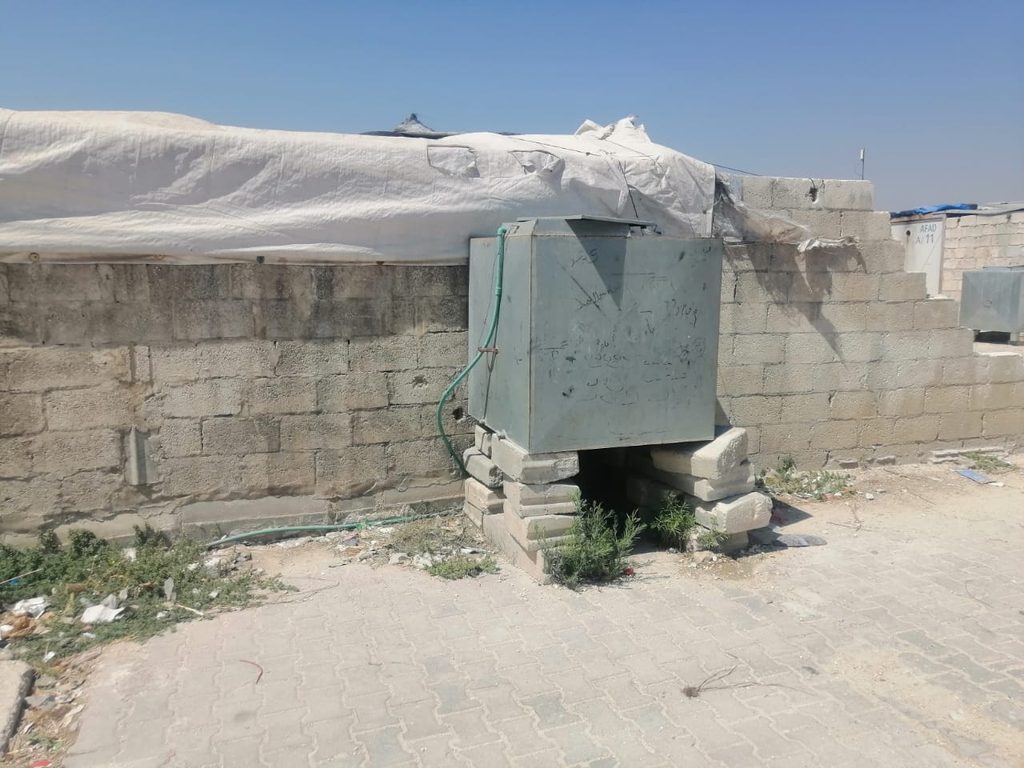
Turning field challenges into reliable evidence
What these situations have in common is a mindset: obstacles are not excuses for weaker data — they are problems to be solved with planning, coordination, and ethical rigor. This is the core of high-quality MERL (Monitoring, Evaluation, Research and Learning) in fragile contexts.
The reliability of a monitoring assignment is not decided in the report. It is decided in the field — in how every challenge is anticipated, managed, and overcome. By combining trained local enumerators, strong partner coordination, and adaptive, transparent methods, ARFADA ensures that even the most demanding distribution monitoring in Syria produces data that partners and donors can trust.
Distribution Monitoring in Syria: Common Questions
What is distribution monitoring in Syria?
Distribution monitoring in Syria is the independent verification that aid distributions actually reached the intended beneficiaries, at the right time and in the right way. It combines on-site observation with phone-based verification to give donors reliable, impartial evidence.
How does ARFADA handle unreachable beneficiaries?
A backup sample is built into the design from the start. When primary respondents cannot be reached by phone, replacement respondents are drawn from the backup list, so the required statistically valid sample is always achieved.
How does ARFADA keep monitoring aligned with changing field plans?
We maintain a live work plan, updated jointly with the implementing partner, and log every change in monthly reports — keeping a transparent audit trail even when activities are postponed or rescheduled.
Which areas of Syria does ARFADA cover?
ARFADA conducts distribution monitoring and third-party monitoring across Syrian governorates, including hard-to-reach areas such as Rural Damascus, combining trained local enumerators with strong partner coordination.
How do we get started with ARFADA in Syria?
Email info@arfada.org with your program, location in Syria and monitoring needs. Our team will scope the assignment and share a tailored proposal.
Need Reliable Data from a Difficult Context?
Talk to our team about distribution monitoring, third-party monitoring, and field data collection for your next program in Syria.
Get in Touch